


DC’s Alley Lot Zoning Just Got Better – Here’s What Changed (and What Still Needs Work)
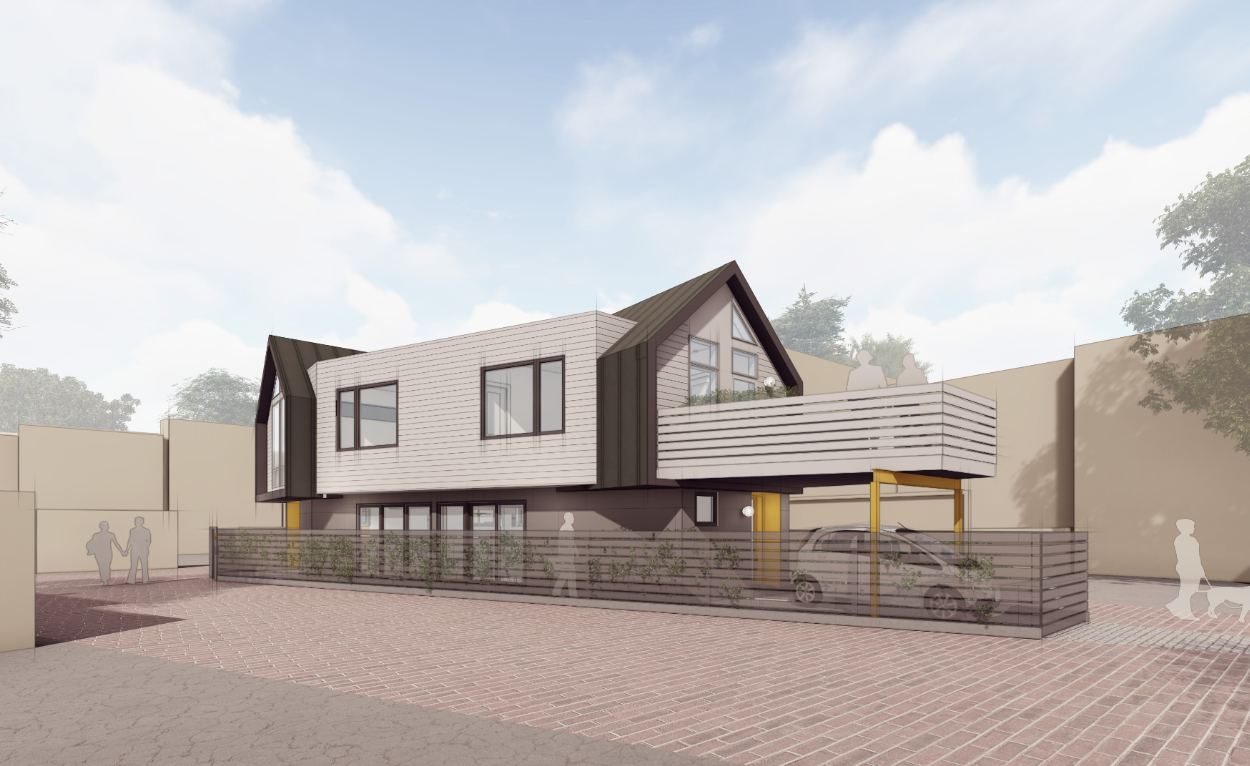
Last fall, we published a piece on the challenges of DC alley lot zoning and development: the height limits, the access requirements, the infrastructure costs, and the persistent friction of navigating a regulatory framework that often seemed to work against the very development it was meant to permit. We noted that a text amendment was in progress and encouraged owners and developers to keep an eye on it.
That amendment has now moved through public hearing, and the Zoning Commission voted 5-0 to adopt it in March 2026. We had a direct hand in shaping the outcome: Will Teass, as a former AIA|DC President and member of the Advocacy Committee, submitted a letter of support on behalf of AIA|DC in January 2026 and testified at the public hearing. Serving as Co-Chair of AIA|DC’s Custom Residential Architect Network (CRAN) committee, I also weighed in on the proposed amendment. Our letter made specific recommendations on height, parking, and pervious surface requirements, drawing on our experience designing alley lot buildings to illustrate exactly why the rules needed to change.
After reviewing the Proposed Rulemaking (Z.C. Case No. 25-06), we think the changes are genuinely meaningful. Not a transformation, but a real step forward. Here’s our read on what got better, what remains difficult, and what the Commission left on the table.
What Changed in DC Alley Lot Zoning
Height
The matter-of-right height limit for alley buildings rises from 20 feet to 25 feet — this is the change we pushed hardest for. In our AIA|DC letter, we argued against the proposed 22-foot limit and specifically recommended 25 feet, illustrating the difference with section diagrams we prepared showing how even three additional feet significantly changes what’s achievable: the 22-foot limit forces slab-on-grade construction with ground-floor living spaces at the same elevation as alley traffic, while 25 feet allows for a crawl space or raised ground floor that creates meaningful separation between habitable space and the service areas of the alley. That privacy and safety argument, along with the energy efficiency and structural flexibility benefits of a crawl space, was central to our testimony. The Office of Planning and the Zoning Commission seemed to take that recommendation to heart.
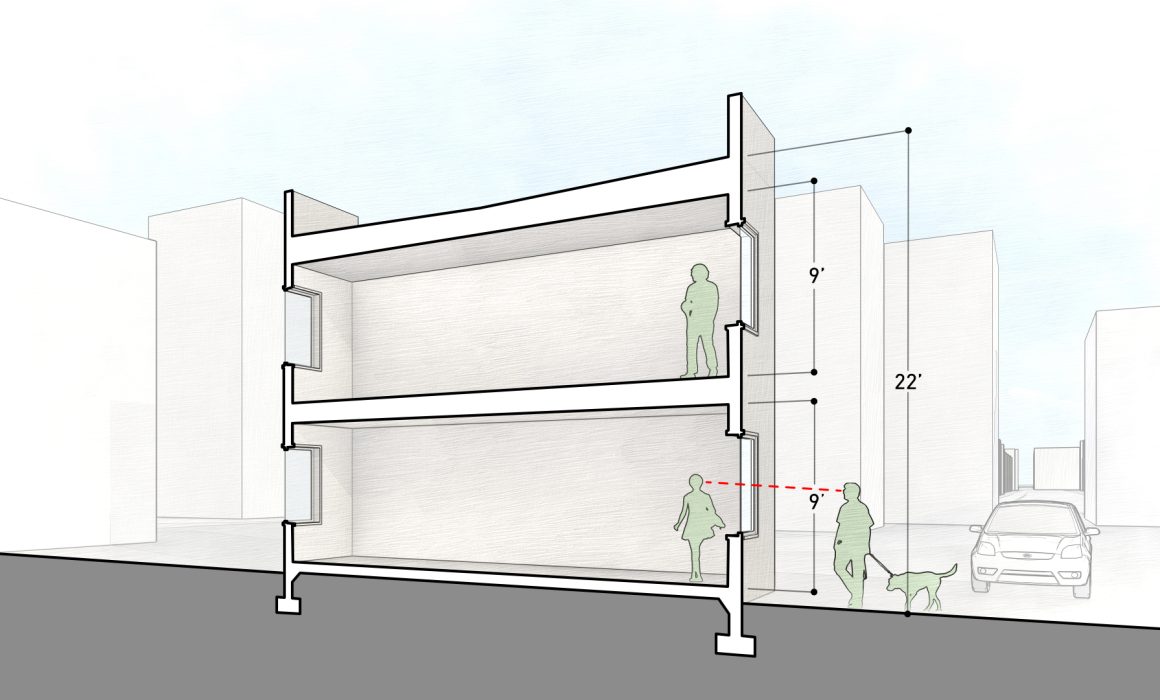
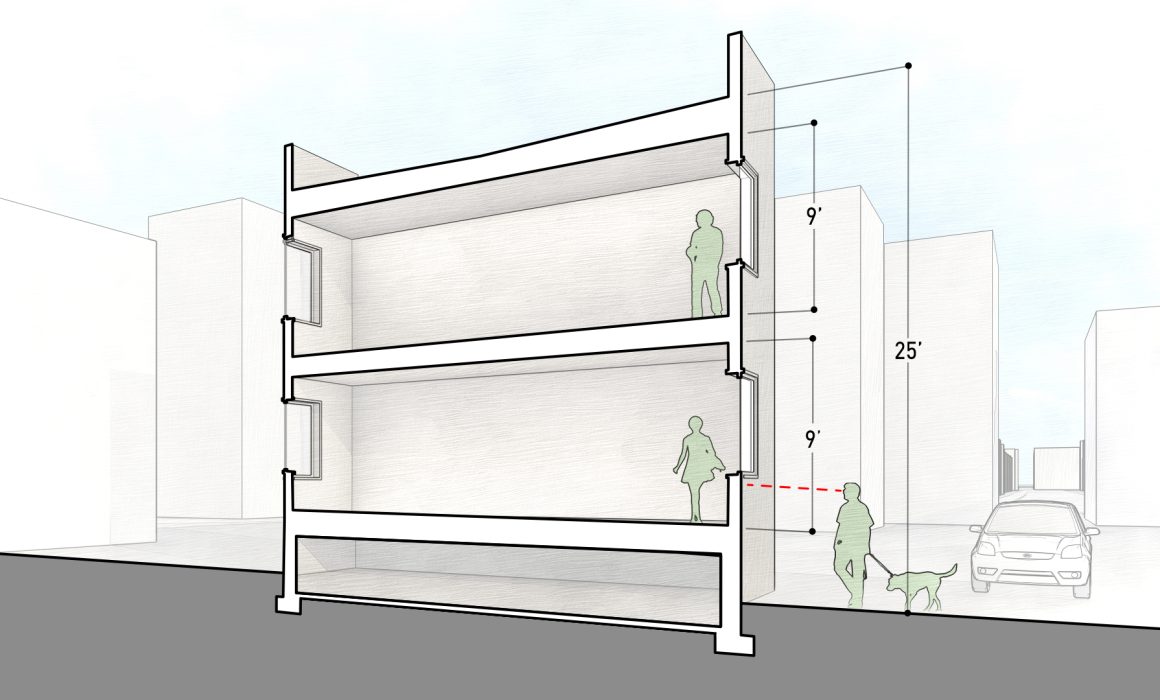
Section diagrams comparing 22-foot and 25-foot alley building height limits in Washington DC
The new 25-foot standard allows more livable ceiling heights and better building performance without requiring special exception review. For larger or more complex projects, the BZA can now approve heights up to 35 feet and three stories in residential zones, or 40 feet and four stories in commercial zones, as a special exception. Penthouses are now explicitly permitted on alley lots, subject to the standard penthouse rules. This is a significant improvement.
Parking
Parking requirements are eliminated entirely for alley lot uses located in residential zones (under Subtitle U §§ 600 and 601). This is long overdue, and another recommendation we made in the AIA|DC letter. The previous requirement was nearly impossible to satisfy on small or irregularly shaped lots, and we pointed out in our letter and testimony that a standard 9′ x 18′ parking space (144 sq. ft.) is more than double the minimum size required for a bedroom (70 sq. ft.), meaning parking was, in effect, consuming space that should house people. About 90% of alley lots in DC are within half a mile of a Metro station or a quarter mile of a high-frequency bus route, making the requirement hard to justify. Removing it eliminates one of the most common reasons alley lot projects fail at the feasibility stage. They also added another barrier to development of these lots.
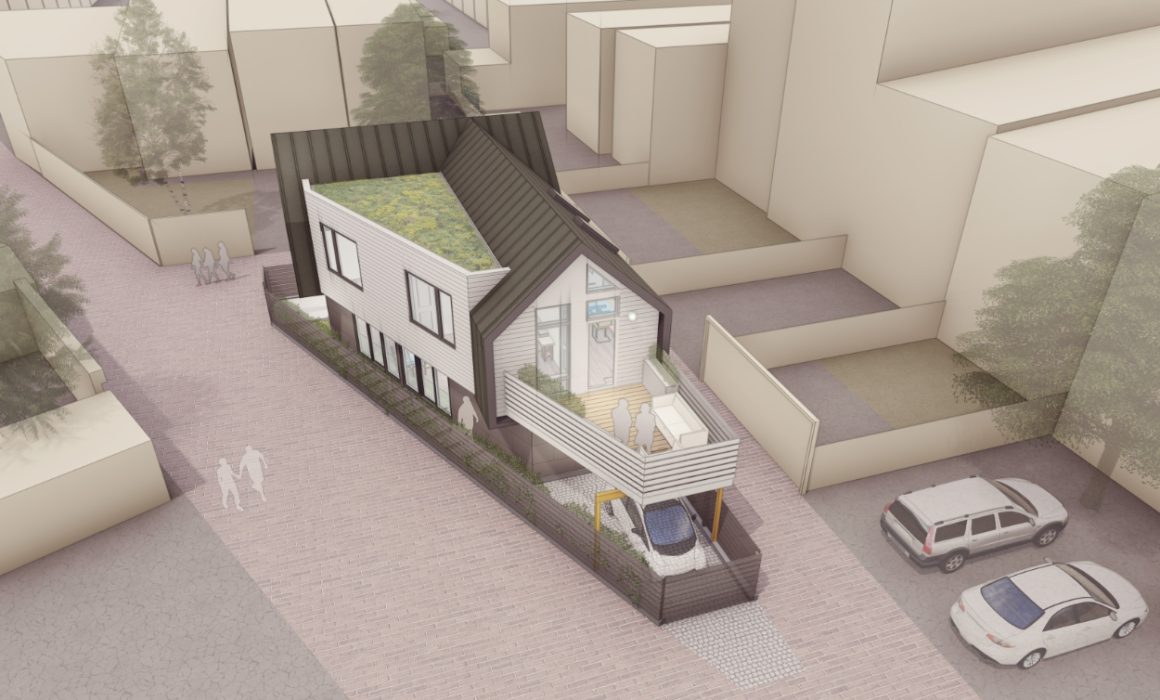
Alley Lot Zoning Changes – Parking Eliminated
Residential Use in R-1 and R-2 Zones
Previously, residential use on alley lots was prohibited in R-1 and R-2 zones (which are typical, single family detached zones). The new zoning regulations allow it, with some important qualifications: in those zones, residential use is permitted only on alley lots that already existed as of the effective date of the regulations (or are subdivided from or expanded from such lots). This prevents the rules from incentivizing speculative subdivision of lots that don’t yet meet current standards, while still unlocking potential in a substantial number of existing lots.
Second Units
A second residential unit, either an accessory apartment or a second principal unit depending on the zone, is now permitted based on lot size. In R zones, one accessory apartment is permitted per lot with minimum lot area thresholds that vary by zone (from 2,000 sq. ft. in R-3 to 7,500 sq. ft. in R-1A). In RF zones, two principal units are allowed on lots of 1,800 square feet or more. This meaningfully changes the financial calculus for development: spreading acquisition and construction costs across two units makes a wider range of alley lots viable and brings the lots in alignment with the overall non-alley lot RF-1 zoning that allows two units by-right.
Lot Occupancy and Yards
R-1 and R-2 alley lots now have tiered lot occupancy limits based on lot size (80% for lots under 3,000 sq. ft., stepping down to 40% for lots 5,000 sq. ft. or larger), which provides more usable area on smaller lots relative to the old blanket standard. Yard requirements are reorganized and clarified, and importantly, front setback rules are confirmed not to apply on alley lots.
Pervious Surface
A tiered approach replaces the previous single standard: lots under 2,000 sq. ft. must have a minimum of 10% pervious surface, while larger lots require 20%. WE thought this was a reasonable compromise. In our AIA|DC letter we raised concern about DOEE’s proposed 25% requirement across the board. While sustainability is a core value for us and for AIA|DC, we argued that applying a pervious surface standard to alley lots that exceeds what’s required of adjacent non-alley lots was counterproductive, adding cost and shrinking buildable area on the very lots the amendment was designed to activate. The tiered approach the Commission ultimately adopted threads that needle reasonably well.
Special Exception for Subdivision
A new special exception process now allows alley lots that don’t meet the 24-foot matter-of-right alley width requirement to still pursue subdivision, subject to BZA review and agency referrals including FEMS, DDOT, and DC Water. This creates a pathway where none previously existed.
Where DC Alley Lot Zoning Still Falls Short
The Alley Width Question
The matter-of-right alley width for subdivision stays at 24 feet. The updated DC alley lot zoning rules originally proposed reducing it to 15 feet — the Office of Planning supported it, multiple ANCs supported the reduction, and the Coalition for Smarter Growth was disappointed to see it withdrawn. FEMS made a compelling case that the 15-foot standard could create operational and safety challenges for fire equipment, and the Commission agreed. The new special exception process provides some relief, but it adds time, cost, and uncertainty to what would otherwise be a matter-of-right path and a time and money saver for lots that already have a outside burden to develop.
Infrastructure Costs
The regulatory changes don’t touch the underlying infrastructure challenge. Most alley dwellings still require entirely new utility service lines (electricity, water, and sewer) extending from mains in the nearest public street. Coordinating with multiple agencies, trenching under alleys, and bearing the full cost of those extensions remains a significant financial burden. On smaller lots, this cost alone can still make a project infeasible.
Alley Naming
This one didn’t change, and it deserves attention: before a property can receive an address, the alley must be officially named through the D.C. Council. Without an address, permits and utility services can’t be issued. The naming process is time-consuming and unpredictable. It runs through legislative channels, not administrative ones, which means it can’t be expedited the way a permit application might be. We always advise clients to start this process early, ideally running in parallel with design and early permitting. That advice still stands, and if anything, the new rules make it more important, because they open up more lots for development as a matter-of-right but this procedural hurdle is unchanged.
Unit Limits and Height: Still Below Zone Standards
Multiple ANCs and advocates pushed for unit limits and height maximums to align with what the underlying zone permits for street-facing lots. The Commission declined, finding that the proposed standards struck the right balance between housing production and neighborhood character. We understand the concern, but for developers and architects the disconnect creates an uneven playing field: alley lot projects are held to lower density limits than comparable street-facing lots in the same zone, which affects financing, feasibility, and the range of housing types that can be built.
The Bottom Line
DC’s alley lots represent a genuinely underutilized resource: nearly 1,900 parcels, many of them vacant or underused, scattered through some of the city’s most walkable and transit-connected neighborhoods. The updated DC alley lot zoning rules won’t unlock all of them, and the remaining challenges (alley width constraints, infrastructure costs, and the naming requirement) are real. But the combination of taller matter-of-right heights, eliminated parking requirements, second-unit allowances, and new residential permissions in R-1 and R-2 zones meaningfully expands what’s possible.
For property owners sitting on alley lots, this is a good moment to take a fresh look at what your lot might support under the new rules. For developers and architects, the financial feasibility of more alley lot projects just improved. And for the city, these changes represent a step toward more efficient use of land in established neighborhoods. Given DC’s housing constraints, that’s exactly the kind of progress worth building on.
We’ll continue to track the final rulemaking and any proposed new amendments. If you own an alley lot and want to talk through what the new rules mean for your property, we’re happy to have that conversation – reach out to us!
